Understanding Inversion Therapy: How It Helps Relieve Back Pain Safely


If you’ve ever experienced back pain, you know how quickly it can interrupt your day and limit your movement. For many, inversion therapy offers a simple, natural way to find relief by helping the spine decompress and muscles relax. But if you’ve ever wondered whether hanging upside down is safe or actually effective, you’re not alone.
Let’s take a closer look at how inversion therapy works, what the current research shows, and how to use an inversion table safely and comfortably.
What Is Inversion Therapy?
Inversion therapy uses gravity to gently stretch and decompress the spine. Whether you’re using an inversion table, gravity boots, or a device like the Teeter DEX, reclining with your head below your feet can help reduce pressure on your back and ease tension in the muscles and joints.
When you’re upright all day – standing, sitting, or moving around – the force of gravity is constantly compressing your spine. Over time, this can lead to stiffness, nerve pressure, and discomfort. Inversion therapy gives your body a break from that compression, allowing the spine to elongate and relax naturally.
Many people call it a “reset” for their back, similar to taking a deep breath but for your spine. It helps to stretch and relax your back after sitting or standing for a long time.
What the Research Says
Studies on inversion therapy show encouraging results. For example, a 2012 study conducted at Newcastle University found that patients with sciatica who practiced inversion therapy were significantly less likely to require surgery compared to those who did not.
Benefits of Inversion Therapy
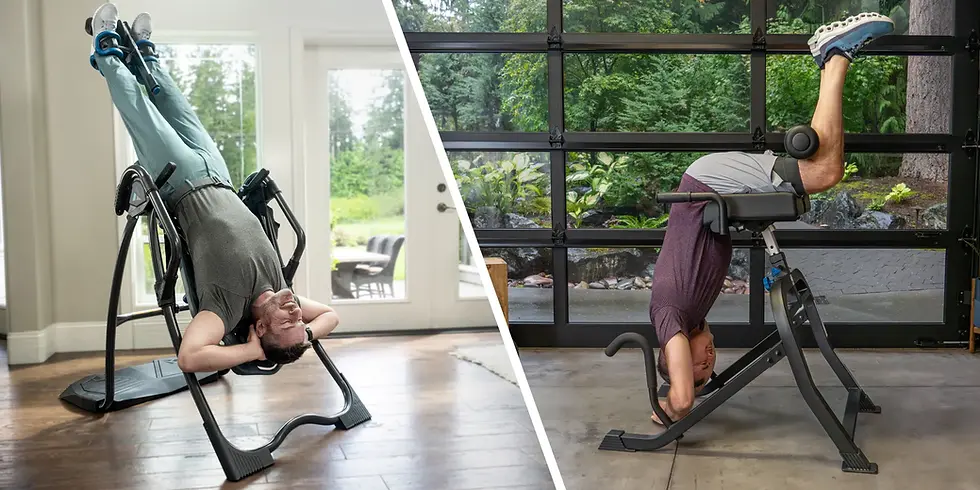
A man using an inversion table for back stretching and relaxation, positioned in a bright room with large windows and wooden flooring. The goal of inversion therapy is simple: use gravity to your advantage. Here’s what research and user experience suggest about the most common inversion therapy benefits.
1. Relieves Back Pain and Sciatica
By gently stretching the spine, inversion helps take pressure off the discs and nerves that contribute to lower back pain and sciatica. This release encourages nutrients and fluids back into the discs, which can lead to better spinal health over time. Many people notice less tension and feel more comfortable after just a few sessions, although results can differ from person to person.
2. Improves Flexibility and Mobility
Regular inversion techniques can help relax tight muscles and joints, making it easier to move and bend comfortably. By easing tension in the back and hips, it can improve your posture and increase flexibility, especially if you sit or stand for long periods.
3. Supports Spinal Health
When the spine decompresses, the space between vertebrae slightly increases, giving your discs room to rehydrate. This can help counteract the daily pressure from gravity and support proper spinal alignment over time.
4. Encourages Relaxation
Inversion therapy can also have a calming effect. The gentle traction helps relax muscles and improve blood flow, making it easier to relax and reduce stress. Some people say they experience better sleep after inverting.
For ordering the range of Teeter Products in India, visit - https://jnbfitness.com/collections/teeter